
Tree Crop Guide
How to Grow Cacao in Hawaiʻi
Wailupe Farms
Waimanalo, Oʻahu
Updated 2026
Cacao can perform well in Hawaiʻi when growers manage shade, moisture, midge habitat, and harvest timing as one system. This guide focuses on practical field operations for windward conditions and island-scale market realities.
You should source cacao from disease-aware local nurseries, research-linked producers, or trusted farm-to-farm networks with known parent material. Hawaiʻi blocks planted with unknown genetics often show uneven pod quality and different ripening windows that complicate harvest labor.
Prioritize vigorous starts with healthy root systems and documented source information. If your existing trees are unknown type, map and tag each tree by performance so future propagation can be based on your best producers.
You should plant cacao into well-drained soil with early shade protection and immediate mulch to keep root-zone moisture stable. Young cacao in Hawaiʻi struggles most from wind and drought swings, not from lack of heat.
Cacao spacing in Hawaiʻi usually falls between 12 and 20 feet depending on management intensity. Higher density can lift early yield per acre, but only if you maintain strict pruning and access lanes.
Use the standard planning formula: 43,560 ÷ (row spacing × in-row spacing). That gives about 302 trees/acre at 12'×12', 194 at 15'×15', and 109 at 20'×20'.
Cacao needs steady root-zone moisture and does not tolerate long dry-down periods, especially in the first 2-3 years. Even on windward Oʻahu, planned irrigation is still essential during trade-wind dry spells.
Use drip or microsprinkler systems that keep soil moist without creating trunk-splash conditions. In wetter months, shift to shorter cycles and monitor for standing water near roots.
Cacao usually reaches first meaningful production around year 3 in Hawaiʻi, with stronger and more stable yields by years 4-5. Time to maturity depends heavily on pruning, pollination support, and nutrition consistency.
Use annual yield tracking per tree from year 2 onward so you can identify low performers and decide whether to topwork or replace them.
You maintain cacao by controlling shade, regulating tree height, and keeping orchard floors biologically active but not overgrown. Hawaiʻi cacao performs best when orchard hygiene and pollinator habitat are balanced instead of treated as separate tasks.
A practical Hawaiʻi cacao schedule is consistent irrigation with split fertilizer applications through active growth and pod fill periods. Small, repeated applications are typically safer than large infrequent doses in high-rainfall soils.
The most important cacao pest strategy in Hawaiʻi is integrated management of ants, sap-feeding insects, and pod diseases through sanitation and airflow. Overly wet, crowded blocks are where losses escalate fastest.
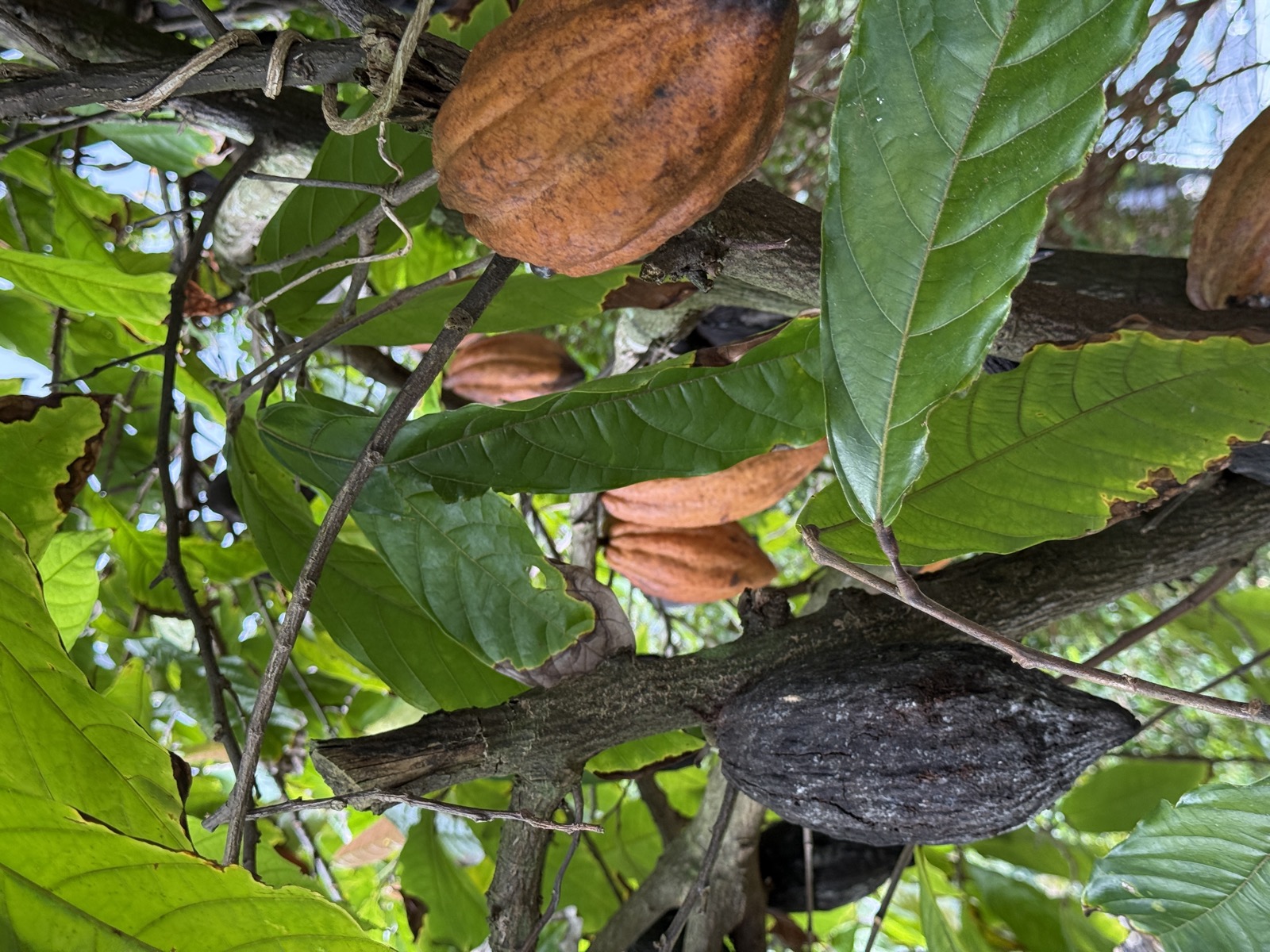
You should harvest cacao pods at full ripeness, open them promptly, and begin fermentation the same day when possible. Harvest delays reduce flavor potential and can increase spoilage in humid Hawaiʻi conditions.
For farm diversification and market timing, compare with our ʻulu guide and seasonal labor windows.
Cacao pruning should be ongoing, with stronger structural passes 2-4 times per year in vigorous Hawaiʻi sites. Replanting usually targets weak trees, chronic disease hotspots, or low-performing genetics in otherwise healthy blocks.
Cacao yield is strongly linked to midge pollination, so orchard floor ecology directly affects pod set in Hawaiʻi. Midges need moist, shaded organic matter; a bare, dry, over-cleaned floor often means weaker pollination.
Retain decomposing organic zones, maintain light shade, and avoid broad-spectrum insecticides that disrupt pollinator and predator communities. For full habitat strategy, use our beneficial insects guide.