
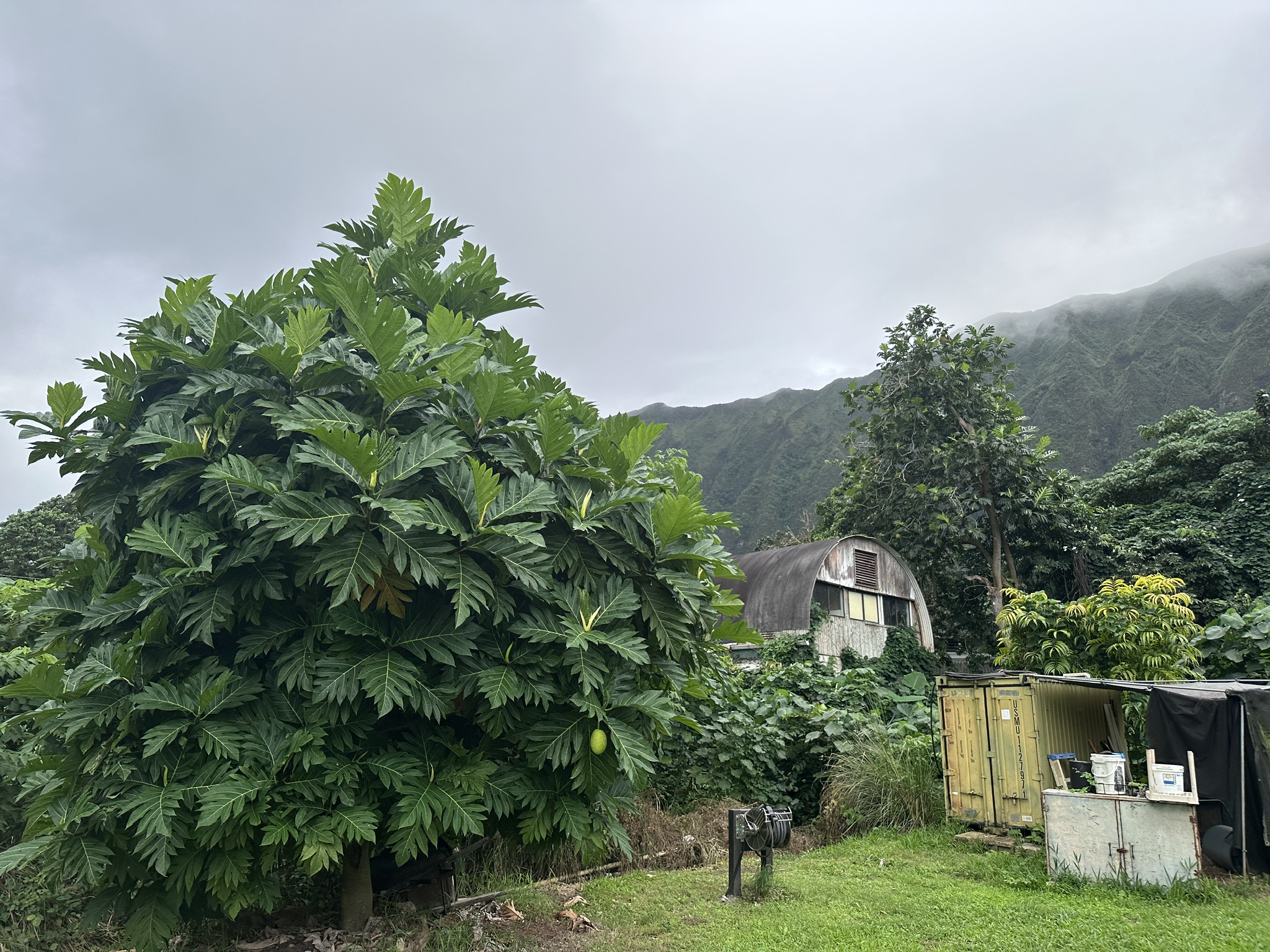
Tree Crop Guide
How to Grow ʻUlu (Breadfruit) in Hawaiʻi
Wailupe Farms
Waimanalo, Oʻahu
Updated 2026
ʻUlu grows exceptionally well in Hawaiʻi when growers plan for long-term canopy size, wind exposure, and harvest handling from day one. This guide follows practical field steps used by Hawaiʻi orchards and extension recommendations.
The best ʻulu planting source is certified, true-to-type vegetative material from a reputable Hawaiʻi nursery or cooperative network. Hawaiʻi growers commonly use grafted, air-layered, or rooted material from known varieties because consistent genetics produce more predictable tree size, fruit quality, and harvest timing.
CTAHR and Hawaiʻi ʻUlu Cooperative materials both emphasize clean planting stock, known variety identity, and tracking source records for each block. If you are building a commercial planting, label every tree with variety and planting date so pruning and harvest decisions stay organized over time.
You should plant ʻulu into well-drained, amended holes at the start of a wetter period, then protect young trees from wind and weed competition. On windward Oʻahu, establishment failures are usually from poor drainage or wind stress, not from temperature.
ʻUlu needs roughly 25–35 feet between trees for long-term productivity in Hawaiʻi. The lower end works only when you commit to frequent canopy reduction; the wider end lowers pruning pressure and improves equipment access.
At 30' x 30', growers run about 48 trees per acre, a spacing widely used in agroforestry planning. Wider lanes also improve airflow, which helps reduce disease pressure in humid zones like Waimānalo.
ʻUlu needs regular deep irrigation during establishment and during dry periods, even in wetter districts. Mature trees are resilient, but inconsistent moisture reduces fruit size and can increase drop before harvest.
Use basin or drip irrigation that wets the root zone deeply rather than daily shallow watering. In windward zones, scale back during rainy stretches to avoid prolonged saturation around the trunk.
Most vegetatively propagated ʻulu trees begin fruiting in about 3–5 years in Hawaiʻi, with stronger commercial production after canopy structure is established. Seedling-origin trees can take notably longer and produce more variable results.
Maturity is also about management: trees with early structural pruning, weed control, and balanced nutrition usually enter reliable production sooner.
You maintain ʻulu by combining canopy control, sanitation, weed suppression, and harvest safety checks year-round. On Hawaiʻi farms, maintenance is about keeping trees in a manageable size class for harvest crews.
For integrated system planning, pair this with our beneficial insects guide and cacao guide if you are building agroforestry rows.
A practical ʻulu schedule in Hawaiʻi is deep irrigation with periodic balanced nutrition, then potassium-forward support before main fruiting periods. Over-fertilizing nitrogen can create excess vegetative growth and weaker fruiting balance.
The biggest ʻulu threats in Hawaiʻi are usually fungal pressure in wet conditions, trunk/root issues from drainage mistakes, and rat or bird damage near ripening. Good airflow, sanitation, and harvest timing prevent most losses.
You harvest ʻulu by cutting mature fruit carefully from the tree, avoiding drop impact, and handling latex immediately after picking. Hawaiʻi ʻUlu Cooperative guidance emphasizes maturity indicators over size alone, including intersegment color and variety-specific external cues.
The best pruning schedule is formative cuts in the first 2–3 years, then annual or semiannual size control to keep trees harvestable. Replanting is typically done only for failed trees, severe storm losses, or planned block renovations.
ʻUlu productivity improves when orchard biodiversity supports pollinators and natural enemies, even though ʻulu systems are not managed like hand-pollinated crops. Farms with flowering borders and lower broad-spectrum pesticide pressure generally maintain stronger ecological balance.
Use staggered flowering strips, maintain some habitat diversity, and manage ants that protect sap-feeding pests. For habitat layouts, see our beneficial insects & flowering plants guide.